Gated Reports That Don't Feel Gated: The Value-First Playbook
How to capture validated business emails without the bait-and-switch, by giving real value before, during, and after the gate.
Key Takeaways
- A gate feels fair when the prospect already received value.
- Show the score before the gate; gate the depth, not the basics.
- Validate emails to capture real contacts, not throwaways.
- Deliver more value after the gate to build trust for the sales conversation.
Gating works, when it feels fair. The same email form can read as a fair exchange or a shakedown, and the difference isn't the form; it's everything around it. Done right, a gate is the moment a prospect happily trades their email for something they already want. Done wrong, it's the moment they bounce and remember your brand as the one that wasted their click. This is the playbook for the first kind.
Why Gates Get a Bad Name
Most gates are bait-and-switch. The pattern is familiar: a bold promise, a form that demands more than it should, and a payoff that underwhelms. The prospect paid up front, with their email, their attention, and a little trust, and got a generic PDF in return. They remember the friction, not the content, and they're warier the next time anyone asks.
The problem isn't gating itself. It's gating first, extracting value before giving any. Flip that order and the entire dynamic changes.
The Value-First Principle
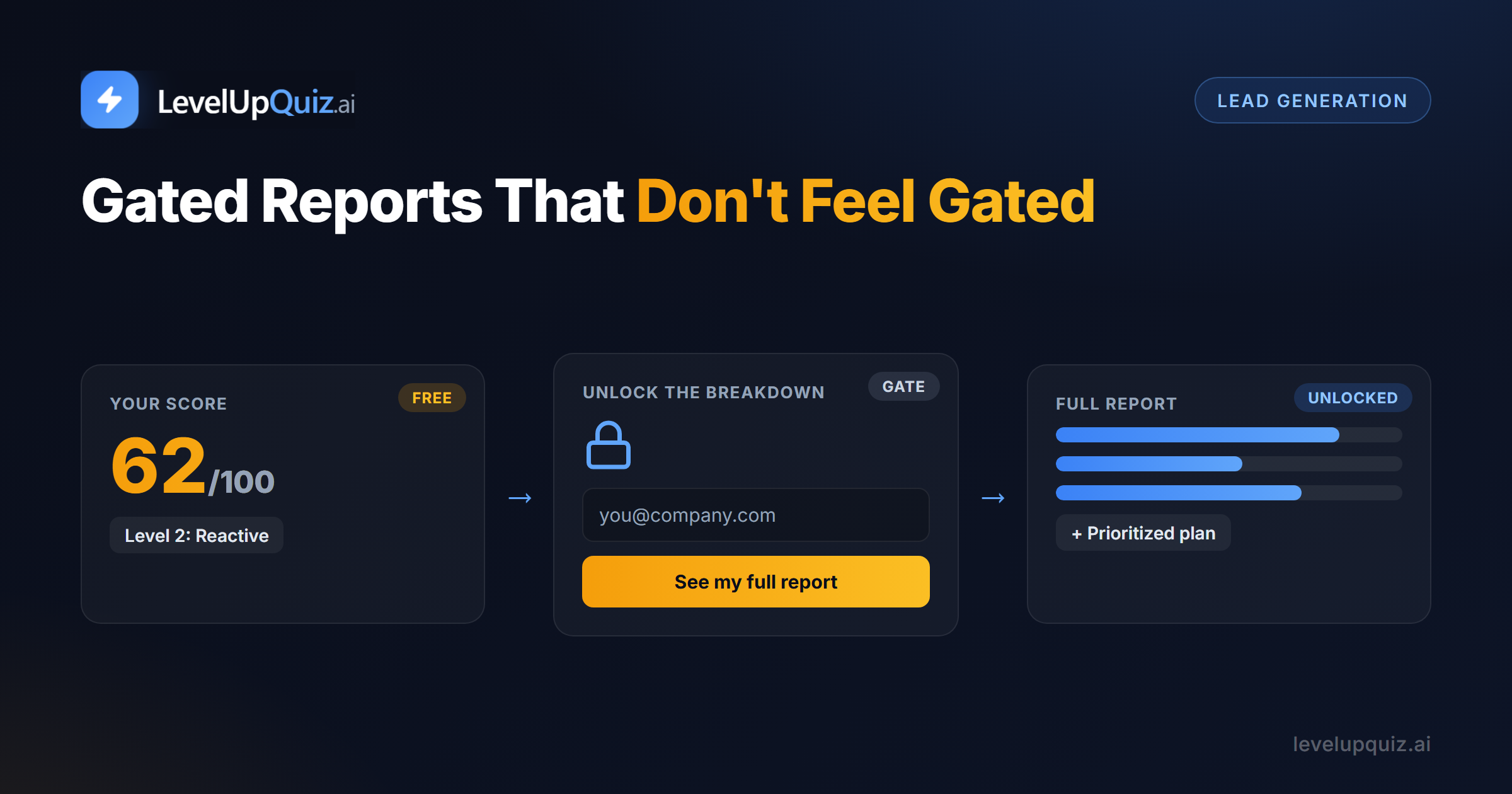
Value-first lead capture is one idea applied in three places: give real value before the gate, gate only the depth, and over-deliver after the gate. When a prospect has already received something genuinely useful, handing over an email to get more feels like a fair trade rather than a toll.
This is why interactive assessments are such a natural fit. They have a built-in "before" (the instant score), a clean line between basics and depth (score vs. full breakdown), and an obvious "after" (the personalized report). But the principle works for any offer, the assessment just makes it easy to get right.
Value Before the Gate
Lead with something genuinely useful, delivered before you ask for anything. In an assessment, that's the instant raw score the moment they finish, a real, personal result that proves the full report is worth an email. In other formats it might be the first genuinely useful section of a guide, or a calculator that returns a real number before asking who you are.
The test is simple: would the prospect feel they got value even if they didn't hand over their email? If yes, you've earned the right to ask for more. If the only value is locked behind the form, you're back to bait-and-switch and they can smell it.
Gate the Depth, Not the Basics
Here's where most teams draw the line in the wrong place. Don't hide the score, the headline number, the basic result. That's the hook that makes the gate worth crossing. Gate the depth: the category-by-category breakdown, the specific gaps, the prioritized action plan, the detailed how.
Give away the "what." Charge an email for the "so what" and the "now what."
Framed this way, the gate isn't a wall; it's an unlock. The copy should reference the value waiting on the other side, "enter your work email to see your full breakdown and personalized plan", not the act of paying. You're reminding them what they get, not what it costs.
Validate the Email (Without Adding Friction)
A gate is only worth crossing if what you capture is real. Three-layer validation does most of the work: block free consumer domains where they don't belong, verify that the domain actually accepts mail (MX records), and screen for obvious fakes like "asdf@asdf.com." The result is a list of real businesses instead of throwaways, the difference between a pipeline your sales team trusts and one it quietly ignores.
The trick is to validate without piling on fields. Ask for the one thing you truly need, usually a work email, and let the experience supply the rest. Every extra field (phone, company size, job title) trades conversion for data you can often enrich later or infer from the answers the prospect already gave you. Friction at the gate is the most expensive friction in the whole funnel; spend it carefully.
Over-Deliver After the Gate
The post-gate experience matters most, and it's the part teams most often phone in. The moment after the email is submitted is when trust is won or lost. Deliver a personalized breakdown that reflects the prospect's actual answers, a clear action plan, and, ideally, a branded report they'd keep and forward to a colleague.
Over-delivering here does two things. It converts a lead into someone who trusts your methodology before the first sales call, and it makes the gate feel, in retrospect, generous rather than transactional. A prospect who got far more than they expected is primed for the conversation that follows; one who got a thin PDF is already gone.
A Worked Example: A Gated Assessment Done Right
Picture a marketing-ops consultancy running a "Campaign Readiness" assessment. The prospect answers fifteen questions about their targeting, data, and measurement, and immediately sees, ungated: "You scored 58/100, Level 2: Reactive." That's the before-value, a real, personal result, free.
To see why they scored 58 and what to fix, they enter a work email. Validation quietly blocks the gmail addresses and fake domains. On the other side, they get a breakdown by category, the three gaps holding their score down, and a prioritized plan, plus a clean branded PDF. Two days later, a rep opens the call with that exact result on screen.
Notice the shape: value before (the score), depth behind (the breakdown), and more value after (the report and a warm, informed call). The prospect never felt gated, because at every step they got more than they gave.
How to Tell If Your Gate Is Working
A healthy value-first gate shows up in three numbers. Gate conversion, the share of people who see the hook and then submit an email, tells you whether the before-value and framing are strong enough; a low rate usually means you gated the hook or over-asked at the form. Email quality, the share of real, right-fit business addresses, tells you whether validation and targeting are doing their job. And downstream engagement, do gated leads open the report, reply, take the call?, tells you whether the after-value actually landed.
Watch them together. High gate conversion with terrible email quality means you're capturing junk; great email quality with low downstream engagement means your post-gate payoff is thin. The goal isn't to maximize any single number. It's a fair trade that produces leads who convert.
The Myth That Friction Qualifies Leads
A persistent objection to value-first capture goes: "but if we make it easy, won't we just get junk leads? Doesn't friction filter for serious buyers?" It's intuitive, and it's mostly wrong.
Friction does filter, but it filters for persistence, not fit. A long, demanding form screens out plenty of high-fit prospects who simply didn't feel like jumping through hoops that day, while a determined tire-kicker will fill in anything. You end up with fewer leads, not better ones.
What actually qualifies a lead is relevant information, and an assessment gathers that as a byproduct of giving value. The respondent answers questions about their situation because they want their result, and those answers tell you fit, maturity, and intent far more reliably than whether they tolerated a fourteen-field form. Qualify with questions that help the prospect, not friction that punishes them.
Where Value-First Fits in the Funnel
Value-first capture isn't a single tactic bolted onto your site; it's a principle that should shape the whole middle of your funnel. At the top, ungated content earns reach and trust. In the middle, where a visitor is interested but not ready to talk to sales, the value-first gate converts that interest into a known, qualified contact without scaring them off. At the bottom, the warm, informed lead reaches sales already diagnosed.
The mistake is collapsing those stages: putting a hard, sales-y gate at the top (suppressing reach) or no capture at all in the middle (letting interested visitors leave anonymous). Map your gates to intent. The higher the intent and the more personalized the payoff, the more you can ask in return, and the value-first sequence is what keeps even your highest-intent gate feeling fair.
Make the "After" Worth Talking About
The single highest-leverage upgrade to most gated funnels is the post-gate payoff, because it's where expectations are either exceeded or betrayed. Aim to surprise. If the prospect expected a score and a paragraph, give them a score, a full breakdown, a prioritized plan, and a polished report they'd actually forward to a colleague.
That generosity pays twice. It earns trust that carries straight into the sales conversation, and it turns recipients into sharers, a report worth keeping is a report worth passing along, which quietly seeds your next batch of leads. Cheap-feeling gates end at the email; generous ones keep working long after it.
When Not to Gate
Honesty matters here: gating isn't always right. Top-of-funnel content meant to build reach and SEO authority, the guide you want everyone to read and link to, should usually stay ungated; a gate there just suppresses the reach you were after. Reserve gates for the high-intent, high-value moments where the prospect is getting something personalized enough to justify the exchange. Gate the diagnosis, not the blog post.
A Quick Self-Check Before You Ship
Before you publish a gate, run it through three questions. First: did the prospect get something genuinely useful before the form, a real result, not just a promise? Second: is what's behind the gate the depth (breakdown, plan, detail), rather than the basics that should have been free? Third: after they submit, will they feel they got more than they gave?
Three yeses and your gate will feel fair, and convert like it. A single no is almost always exactly where the funnel leaks. Fix that one step, the missing before-value, the over-gated hook, the thin payoff, before you touch headlines, button colours, or anything else. The mechanics rarely matter until the trade is fair.
Common Mistakes
- Gating the hook. Hiding the score or headline result behind the form removes the very thing that made crossing it worthwhile.
- Over-asking at the form. Every extra field costs conversion. Ask for the minimum and enrich the rest.
- A thin payoff. A generic result after a gate is the fastest way to burn trust. It confirms the prospect's worst fear about forms.
- Gating everything. If your top-of-funnel reach content is also gated, you've throttled the audience that feeds the funnel in the first place.
The Playbook in One Line
Value before, depth behind, and even more value after. That's how a gate stops feeling like a gate, and starts feeling like the fair trade it should be.
Frequently Asked Questions
Related Articles
Quiz Funnels vs. Lead Magnets: Why Assessments Convert Better
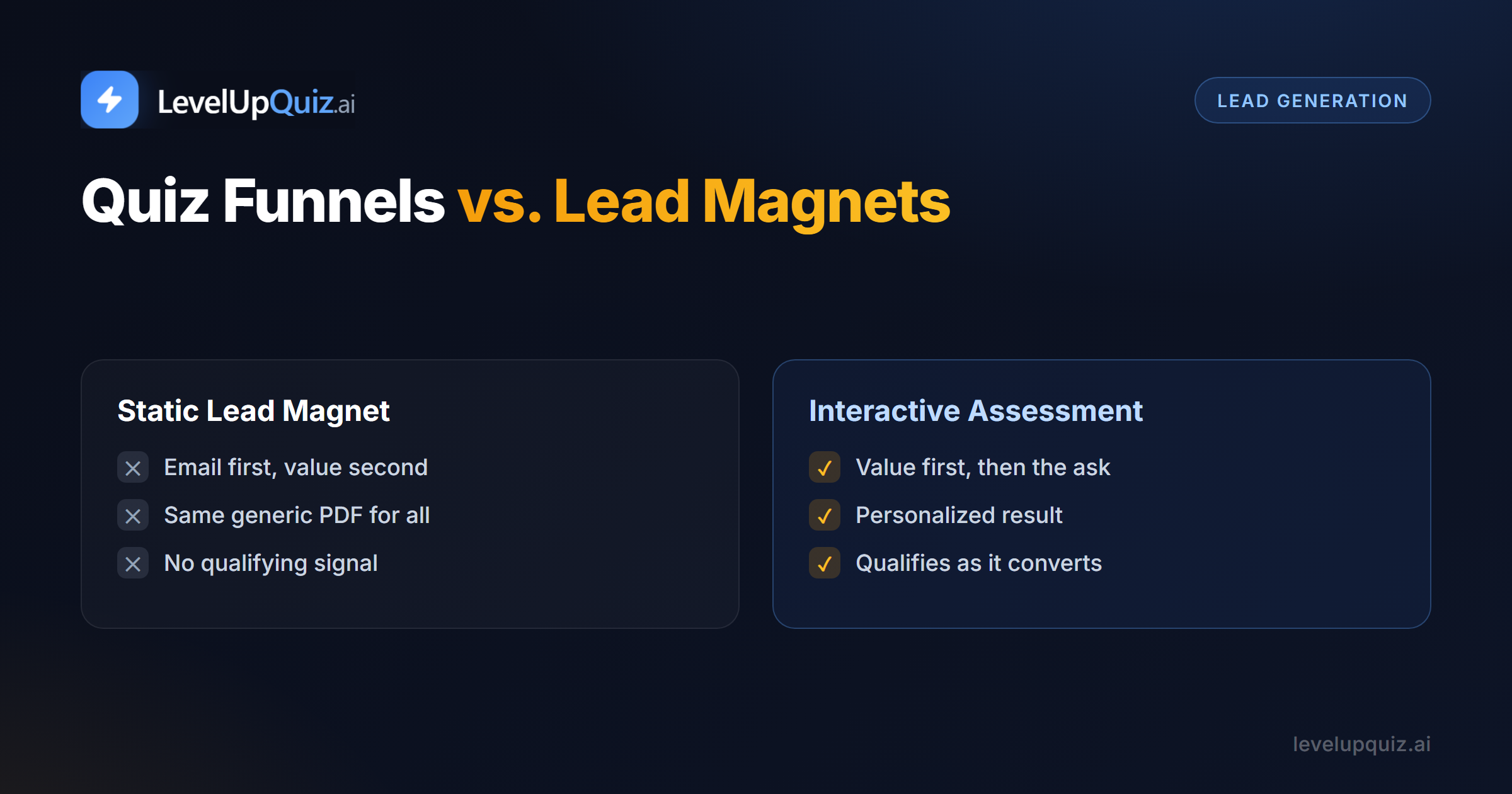
Static lead magnets ask for the email before giving value. Assessments flip that, delivering a personalized result that earns the opt-in. Here is the breakdown.
The Anatomy of a High-Converting B2B Assessment
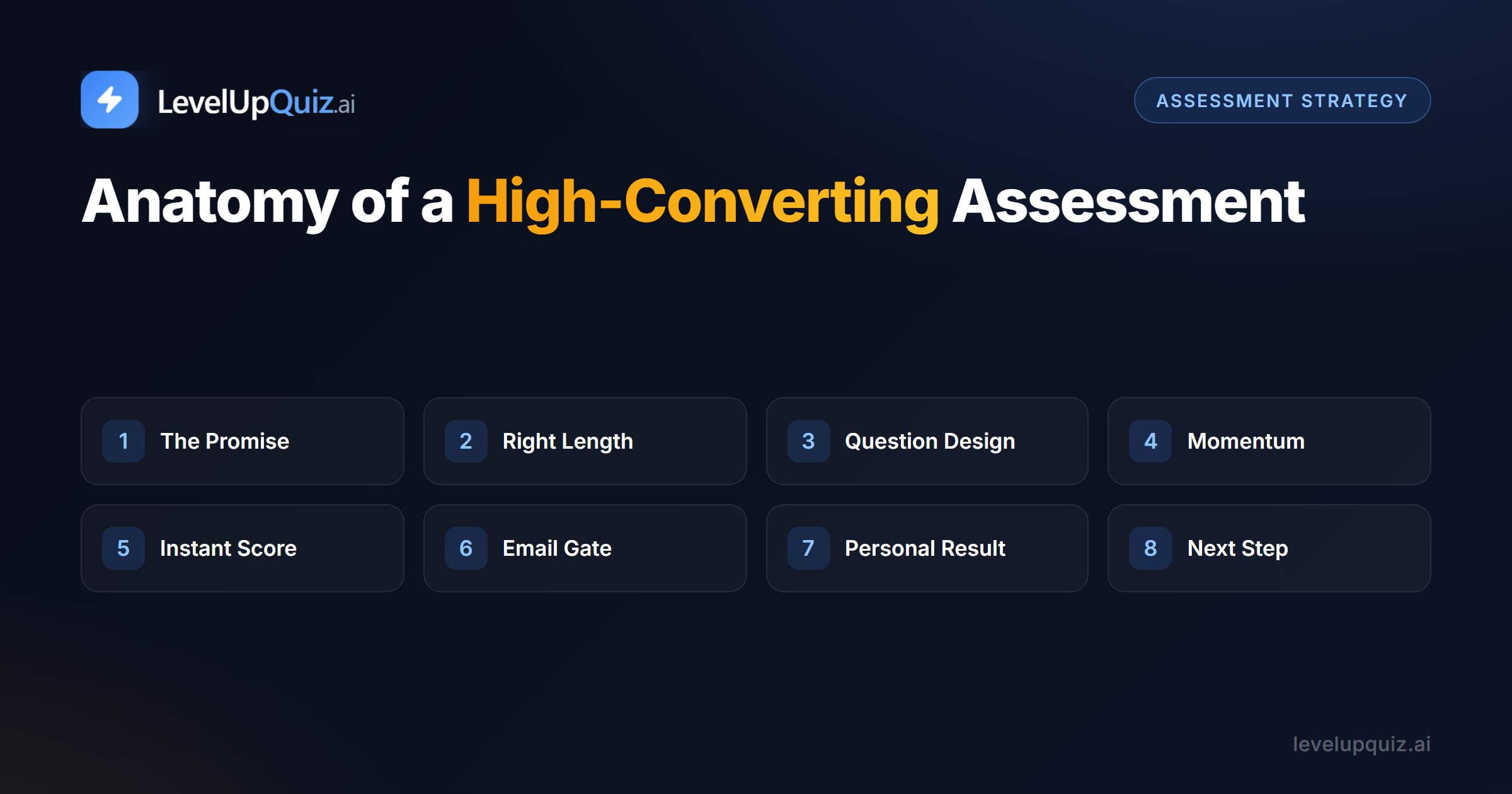
The eight components that separate an assessment people finish and share from one they abandon on question three, from the promise to the personalized result.