Assessment-Led Marketing in Practice: What Actually Changes
Put a scored assessment at the front of your funnel and the metric that matters flips from lead volume to lead quality. Here is the honest breakdown.
Key Takeaways
- Most teams have a lead-quality problem, not a traffic problem.
- An assessment qualifies and educates before a prospect ever talks to sales.
- Sales calls shift from convincing to advising when buyers arrive informed.
- It is a trade: volume usually drops, and the result has to be genuinely good.
"Most businesses don't have a traffic problem. They have a lead-quality problem."
Strip away the tactics and that single reframing is the entire case for assessment-led marketing, sometimes called scorecard marketing. More clicks almost never fix a pipeline clogged with people who were never a fit; they just hand your sales team more of the wrong conversations. A scored assessment attacks the real bottleneck: it sorts, educates, and qualifies the people you already reach, so the ones who come back to you arrive ready to talk.
Here is what actually changes when you put an assessment at the front of your funnel, what improves, what gets harder, and who it genuinely is not for.
The Problem It Solves
The default B2B funnel is built to maximize volume. You buy or earn traffic, capture emails with a static lead magnet, and pass a long, undifferentiated list to sales. It looks productive on a dashboard. The problem shows up downstream.
Everyone who downloads the PDF gets the same PDF. None of them are qualified. And your most expensive resource. Your sales team's attention, gets spread across discovery calls with people who were never going to buy. The cost isn't just wasted hours. It's slower follow-up to the prospects who were ready, a rising cost per real acquisition, and a sales team that quietly learns to distrust marketing's leads.
The bottleneck, in other words, is rarely the top of the funnel. It's the unqualified mass in the middle that clogs everything after it.
An assessment is personal by design. It is about the prospect's situation, not your product. That is why it lowers resistance instead of raising it.
What Assessment-Led Marketing Actually Does
Instead of offering a static download, you offer a diagnostic. The prospect answers a series of questions about their own situation, receives an instant score and a personalized result, and trades a business email to unlock the full breakdown.
Three things happen in that single interaction:
- You qualify on the way in. The answers reveal maturity, fit, and often intent, before a human is ever involved. A lead arrives with context attached, not just an email address.
- You educate without pitching. A strong result teaches the prospect what "good" looks like and shows them, specifically, where they fall short, framed in your methodology and your language. You become the expert who diagnosed them, not the vendor who hassled them.
- You earn the email honestly. Value comes first. The score is free; the depth, the category breakdown, the gaps, the plan, is what sits behind the gate. Because they already got something useful, the trade feels fair instead of extractive.
None of this requires a new tech stack. It requires reframing the offer from "download our guide" to "find out where you stand."
What Changes on Sales Calls
This is where the shift is most visible, and it's the part teams notice first.
When prospects arrive having already diagnosed themselves, the conversation starts in a completely different place. The rep isn't opening with discovery from zero, and they certainly aren't spending the first twenty minutes convincing someone they have a problem. The assessment already did that, gently, using the prospect's own answers.
Picture the two calls side by side. The old one: a cold lead, a rep doing archaeology to understand the business, a slow crawl toward whether there's even a fit. The new one: a prospect who has seen their score, understands their gaps, and booked the call because of what they learned. The rep opens with the result on the screen and goes straight to "here's what I'd do about it."
You're not there to tell the prospect they have a problem. The assessment already showed them. Your job is to bring the plan.
The practical effect is fewer, better conversations. Discovery becomes strategy. The rep's hours concentrate on people who can actually buy. The honest tradeoff, and there is one, is raw volume, which brings us to the verdict.
What You Learn About Your Market
There's a second benefit that compounds quietly. Every completed assessment is a small piece of market research you didn't have to commission.
In aggregate, the answers tell you where your audience actually struggles, which segments are most mature, and which framings resonate. Over months, that structured data sharpens your positioning, your content, and even your product roadmap. A lead magnet gives you an email; an assessment gives you an ongoing, honest read on the market you're selling into, gathered as a byproduct of generating leads.
The Honest Verdict
Assessment-led marketing is not a growth hack, and it isn't free. A few things are worth stating plainly, because the version of this story that hides them isn't trustworthy:
- Lead volume often goes down, not up. You are deliberately filtering. If your team is measured purely on raw MQL count, expect organizational friction until everyone agrees that quality is the goal.
- The result has to be genuinely good. A lazy, generic report after an email gate is worse than having no assessment at all. It actively burns the trust you just built. The personalized result is not optional polish; it is the entire promise.
- It takes real thought up front. A credible scorecard needs a real framework and well-designed questions. It is not the thirty-minute job a throwaway lead magnet is, and the build is where most weak assessments fail.
Used well, the trade is overwhelmingly worth it. Most teams would far rather work a short list of qualified, pre-sold prospects than a long one that buries the good leads under noise. But it is a trade, and you should make it with your eyes open. Your results will vary with your offer, your audience, and how well the assessment is built, treat anyone who promises you fixed numbers with healthy suspicion.
Used well, an assessment reshapes the funnel: fewer but better conversations, and a sales team that finally trusts the leads it's handed. It is a trade, volume for quality, and for most considered B2B purchases, it's a trade worth making.
Two questions come up every time a team weighs this up: who it actually fits, and how to start without rebuilding everything. Both are answered just below.
Frequently Asked Questions
Related Articles
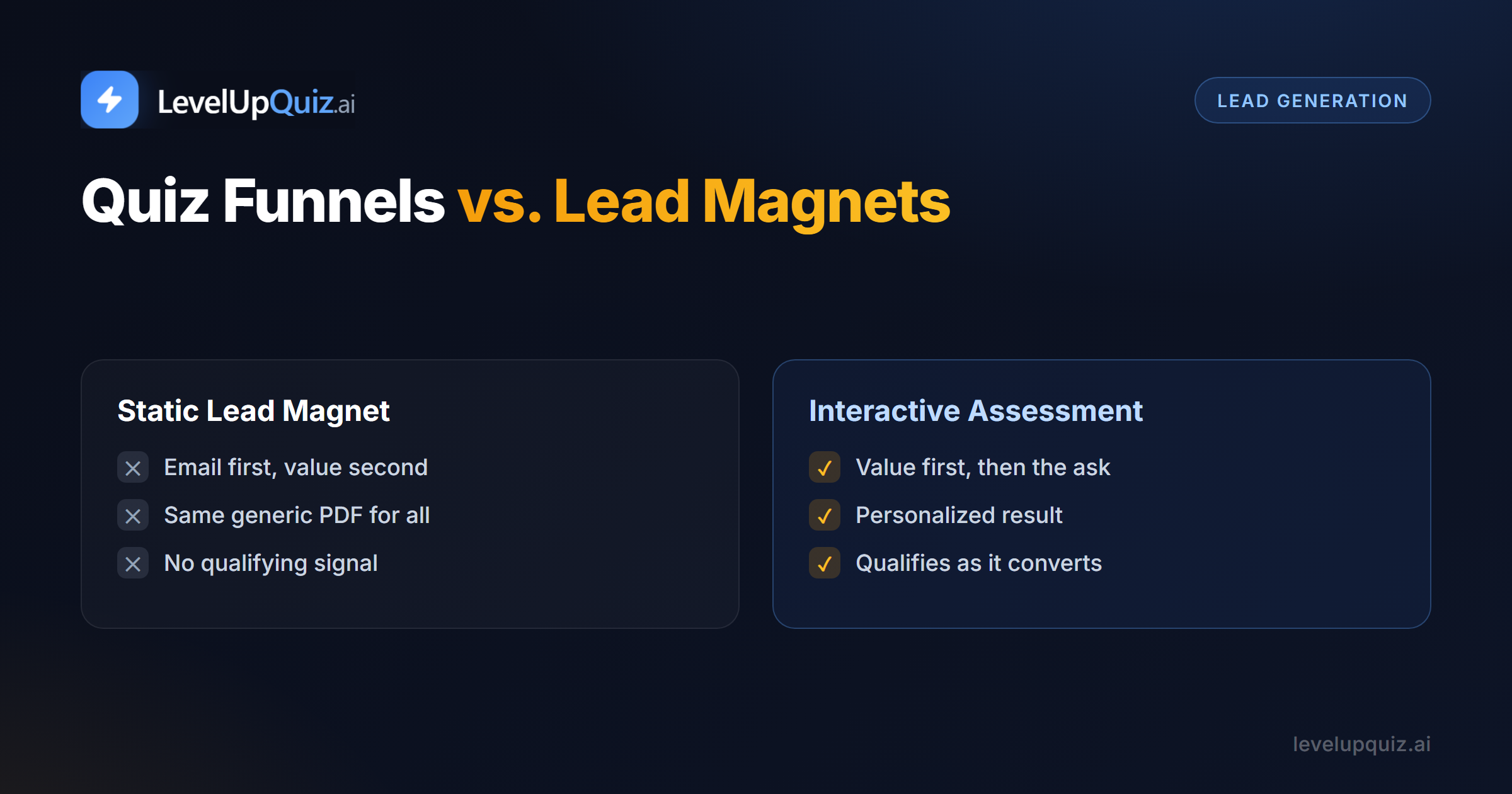
Quiz Funnels vs. Lead Magnets: Why Assessments Convert Better
Static lead magnets ask for the email before giving value. Assessments flip that, delivering a personalized result that earns the opt-in. Here is the breakdown.
"Book a Demo" Is Dead: The Rise of Self-Qualifying Funnels
Buyers want to diagnose themselves before they talk to sales. Assessment-led, self-qualifying funnels meet them there, and hand sales a warmer, smarter lead.
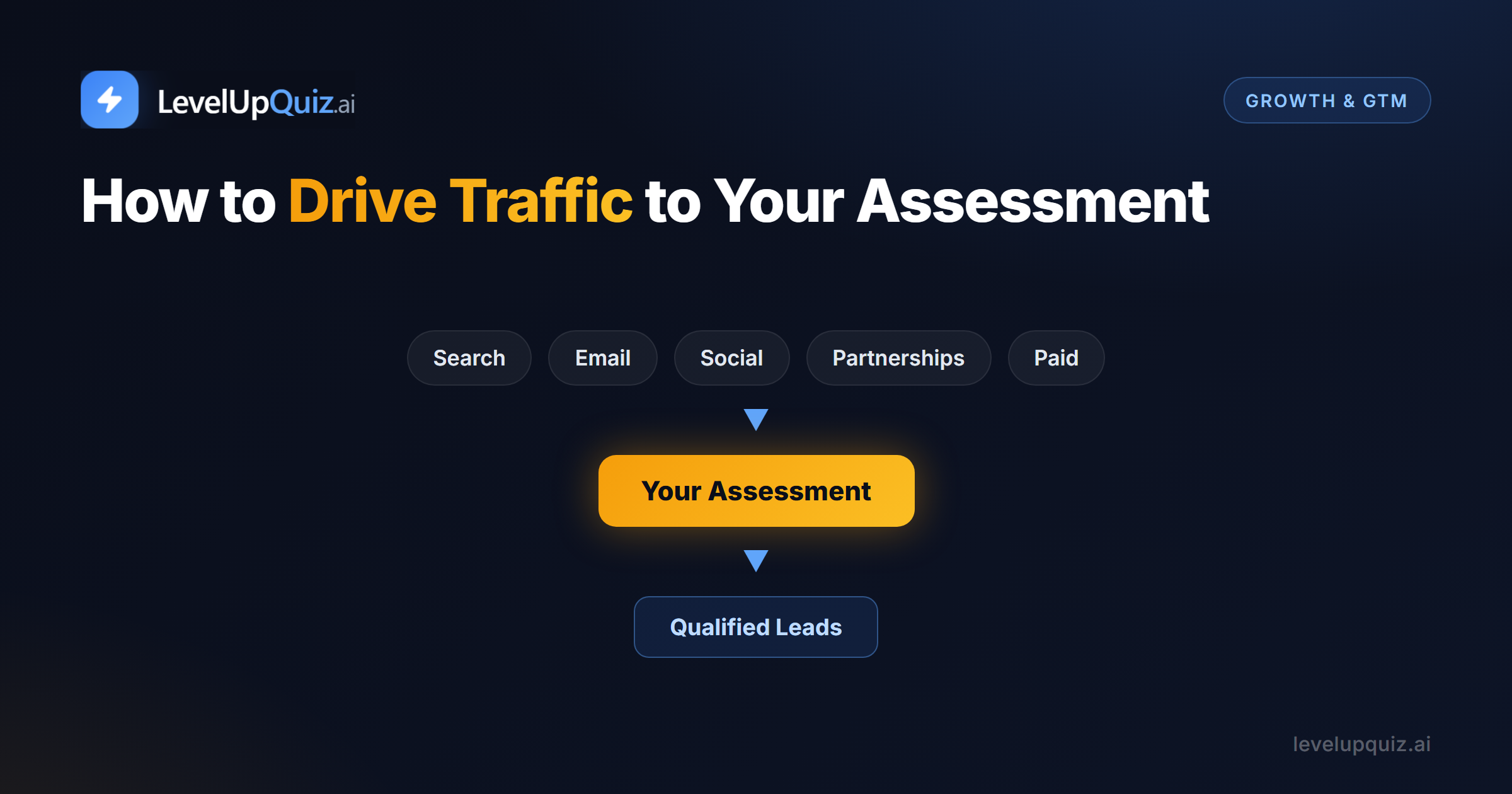
How to Drive Traffic to Your Assessment
A great assessment with no traffic captures no leads. Five repeatable channels, search, email, social, partnerships, and paid, for getting the right people to your quiz.