"Book a Demo" Is Dead: The Rise of Self-Qualifying Funnels
Buyers want to diagnose themselves before they talk to sales. Assessment-led funnels meet them there, and hand sales a warmer, smarter lead.
Key Takeaways
- Modern buyers self-educate and resist talking to sales too early.
- A demo CTA asks for commitment before the buyer has clarity.
- Self-qualifying funnels let buyers diagnose first, then convert warm.
- Sales gets context and intent instead of a cold form fill.
The default B2B call-to-action is still "Book a Demo." It sits in the top-right of nearly every SaaS homepage. And for a growing share of your best prospects, it's the wrong ask at the wrong moment, quietly leaking the people most worth talking to. The fix isn't a better demo; it's a different first step.
The Buyer Changed
Today's buyer self-educates. They read, compare, lurk in communities, and form a point of view long before they want to talk to a salesperson. By the time they're willing to raise a hand, they've often done most of their own research. A demo-first CTA ignores all of that. It asks for commitment at the exact moment the buyer wants clarity, not a pitch.
The result is predictable: the small fraction who are ready-to-buy click "Book a Demo," and everyone else, including plenty of high-fit prospects who simply aren't ready to be sold to yet, bounces. You're optimizing for the bottom of the funnel and losing the middle.
What a Demo CTA Really Asks
Strip away the friendly button copy and a demo CTA says:
"Give us your contact details and an hour of your time, and let a rep pitch you", before the buyer even knows whether they have the problem you solve.
That's a high-commitment ask aimed at a low-commitment moment. It demands time, invites a sales process, and offers, from the buyer's point of view, uncertain value in return. No wonder conversion is thin and no-show rates run high.
The Self-Qualifying Alternative
A self-qualifying funnel inverts the sequence. Instead of "talk to us and we'll tell you if you're a fit," it's "find out where you stand, and decide for yourself." The buyer takes an assessment, gets a personalized diagnosis of their own situation, and then, informed and warm, decides whether to talk.
- Lower-commitment entry. Answering questions about yourself is far easier than booking a sales call.
- Personalized value before any pitch. The buyer gets something useful whether or not they ever speak to you.
- The buyer qualifies themselves. Their answers tell both sides whether there's a fit before anyone's time is spent.
How a Self-Qualifying Funnel Works
The mechanics are straightforward:
- The hook. A diagnostic offer, "How does your X compare?", replaces or sits alongside "Book a Demo."
- The assessment. The prospect answers questions about their situation and gets an instant score.
- The gate. The full breakdown and action plan unlock with a validated business email.
- The routing. Based on their answers, ready buyers are invited to talk; everyone else enters a nurture track with genuine value.
- The conversation. Reps open with the prospect's own result, not a blank discovery script.
Each step lowers commitment relative to a demo while raising the quality of whoever reaches the call.
What Sales Actually Gets
This is the part that wins over a skeptical sales team. Instead of a cold form fill and a name, sales receives context: the prospect's maturity level, their specific gaps, and intent signals pulled from their answers. The first call starts halfway home.
Reps stop spending the first twenty minutes on discovery and stop trying to convince someone they have a problem, the assessment already did that, gently, with the buyer's own answers. The result is fewer calls, better calls, and higher close rates on the ones that happen.
A Worked Example
A B2B software company swaps its hero CTA from "Book a Demo" to "Take the 2-Minute Readiness Assessment," keeping the demo button as a secondary option.
Raw "talk to sales" volume drops, fewer people book cold. But the assessment captures far more engaged prospects, qualifies them by their answers, and routes the ready ones to sales with context attached. The reps' calendars fill with informed, pre-diagnosed buyers instead of tire-kickers. Total demos may be flat or even down; qualified demos and close rate go up. That's the trade, and for most considered purchases it's a good one.
Keep the Demo, Just Move It
None of this kills the demo. It repositions it. The demo becomes the step after self-diagnosis, reserved for buyers who've seen their result and raised their hand, not the blunt instrument you point every visitor at.
For those buyers, the demo is better too: the rep already knows their situation, so the conversation is tailored from the first minute instead of starting from "so, tell me about your business."
Why the Demo-First Funnel Leaks
It helps to see exactly where the leak happens. Picture 100 interested visitors hitting a page whose only call to action is "Book a Demo." A handful, the few who are ready to buy right now, click. The rest face a choice between a high-commitment sales call and leaving, and most leave. You captured the ready few and lost the interested many, including high-fit prospects who were one good experience away from raising their hand.
Those lost visitors don't come back labeled. They become anonymous bounce traffic, and you conclude you have a "traffic problem" when you actually have a first-step problem. The demo-first funnel doesn't fail loudly; it just quietly converts a small slice and lets the rest evaporate.
Objections From Your Sales Team (and Answers)
Sales teams are reasonably skeptical, and the objections are predictable:
- "This will mean fewer demos." Fewer cold demos, yes, and more qualified ones. The reps' time concentrates on buyers who arrive diagnosed, which usually lifts close rate enough to more than offset the drop in raw volume.
- "An assessment is a gimmick." It's the opposite of a gimmick if the result is genuinely useful. It's structured discovery the prospect volunteers to do, before the call.
- "We'll lose the high-intent buyers who just want to talk." You won't, keep the demo button as a secondary CTA. Ready buyers can still book directly; everyone else gets a lower-commitment on-ramp.
Naming these up front, with the trade stated honestly, is how you get sales to buy in rather than quietly route around the new funnel.
How to Make the Switch Without Spooking Sales
You don't have to flip the whole site overnight. Run the new funnel alongside the old one and let the data make the case. Add the assessment as the primary hero CTA on one high-traffic page while keeping "Book a Demo" as a visible secondary option. Route assessment-qualified leads to sales with their result attached, and tag them so you can compare.
After a few weeks, compare the two paths on the metric that matters, not raw demo count, but qualified conversations and close rate. If the assessment path wins (it usually does for considered purchases), expand it; if it doesn't, you've risked one page, not your pipeline. A measured rollout turns a scary change into a low-risk experiment sales can get behind.
When "Book a Demo" Still Belongs
Be honest about the exceptions. If you sell a simple, low-consideration product, or your traffic is almost entirely high-intent (branded search, bottom-of-funnel), a direct demo CTA can be the right primary action. Self-qualifying funnels shine when the purchase involves real consideration and the buyer benefits from understanding their own situation first. Match the funnel to the sale.
The Psychology of the Lower-Commitment Ask
Why does a diagnostic convert where a demo doesn't? Commitment. "Book a demo" asks for time, attention, and exposure to a sales pitch, a big ask from someone still orienting. "Find out where you stand" asks for two minutes and a little curiosity about themselves, and pays it back immediately with a result. The smaller, self-interested ask clears a far lower bar, which is why more of the right people say yes. You're not lowering your standards; you're lowering the commitment required to enter, and using the assessment to raise quality on the way through.
Don't Make Buyers Choose Between 'Now' and 'Never'
A demo-only page forces a binary: commit to a sales call now, or leave. Most interested-but-not-ready buyers pick "leave," and you never hear from them again. A self-qualifying funnel adds the missing middle option, engage, learn, and stay in touch without committing to a pitch. That middle path captures the majority who aren't ready today but will be in a quarter, turning one-time bounces into a nurtured pipeline that matures on its own.
What Changes for Marketing
The shift isn't only a sales win; it reshapes marketing's job. Instead of optimizing a page for the tiny fraction ready to book, marketing optimizes for the much larger pool willing to self-diagnose. Top-of-funnel content can now point to a low-commitment, high-value next step instead of a cliff-edge "Book a Demo," so more of the traffic marketing already pays for converts into known, qualified contacts rather than anonymous bounces.
It Fits How Committees Actually Buy
B2B purchases are made by committees, and most of the committee will never book a demo, but they will take a two-minute assessment and share the result internally. A self-qualifying funnel meets the researchers, the influencers, and the skeptics where they are, and arms your internal champion with a credible diagnosis to circulate. The demo, when it happens, is then a conversation with a group that's already aligned, not a cold pitch to one person who still has to sell it onward.
Measure the Right Thing
Judge the switch on qualified pipeline and close rate, not raw demo count. Watch four numbers: assessment completion, qualified-lead rate, demo show-rate (warm, pre-diagnosed buyers show up far more reliably), and close rate on assessment-sourced deals. If those improve, a drop in total demos is a feature, not a bug. You've traded volume you couldn't convert for quality you can.
The Shift
Meet buyers where they actually are: wanting to understand themselves before they're sold to. Build the funnel around diagnosis instead of demand-the-meeting, and the conversations get easier on both sides, lower commitment to enter, higher quality by the time anyone talks. "Book a Demo" isn't dead. It's just no longer the only door, and for most of your best prospects, no longer the first one.
Frequently Asked Questions
Related Articles
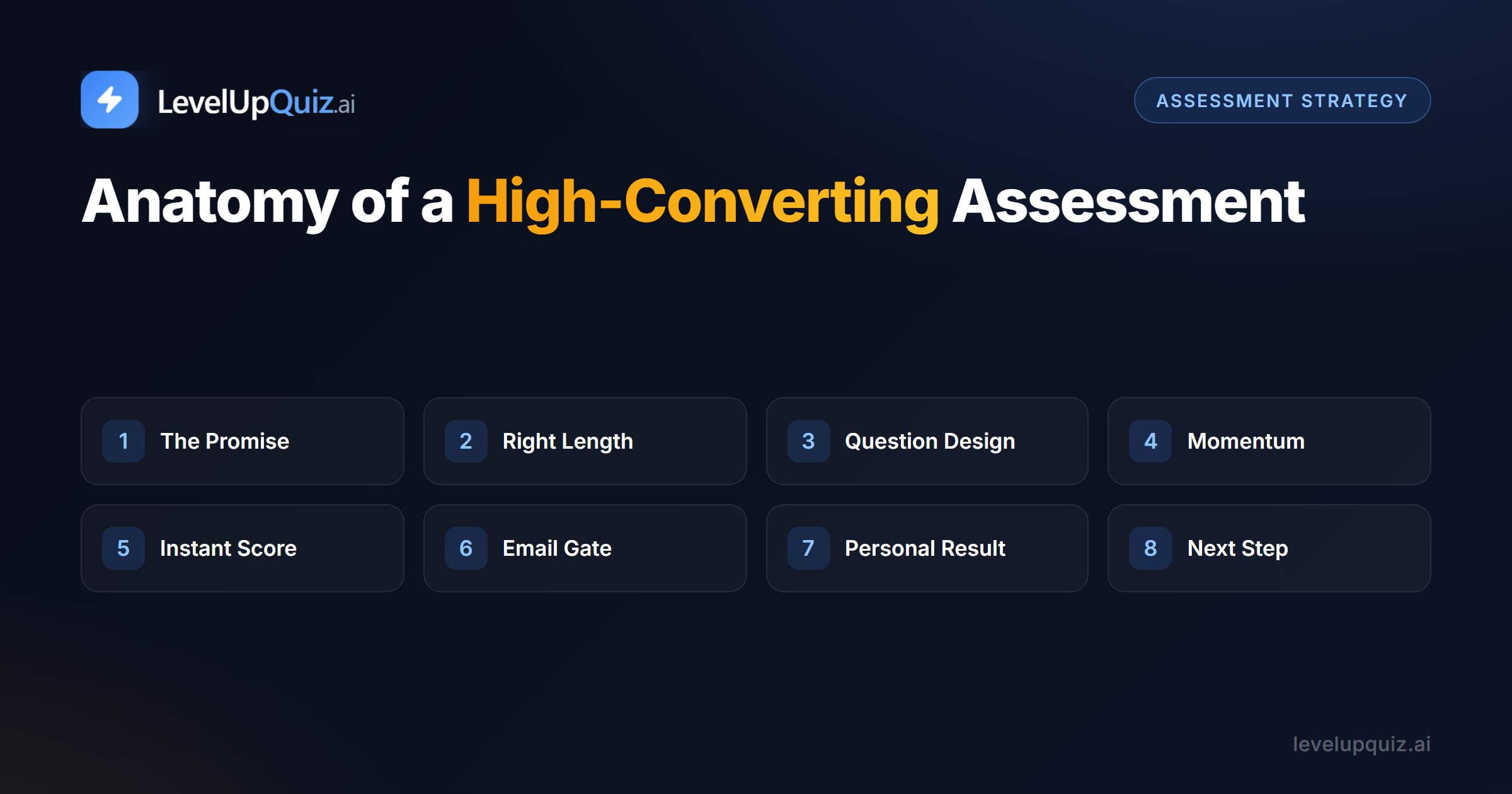
The Anatomy of a High-Converting B2B Assessment
The eight components that separate an assessment people finish and share from one they abandon on question three, from the promise to the personalized result.
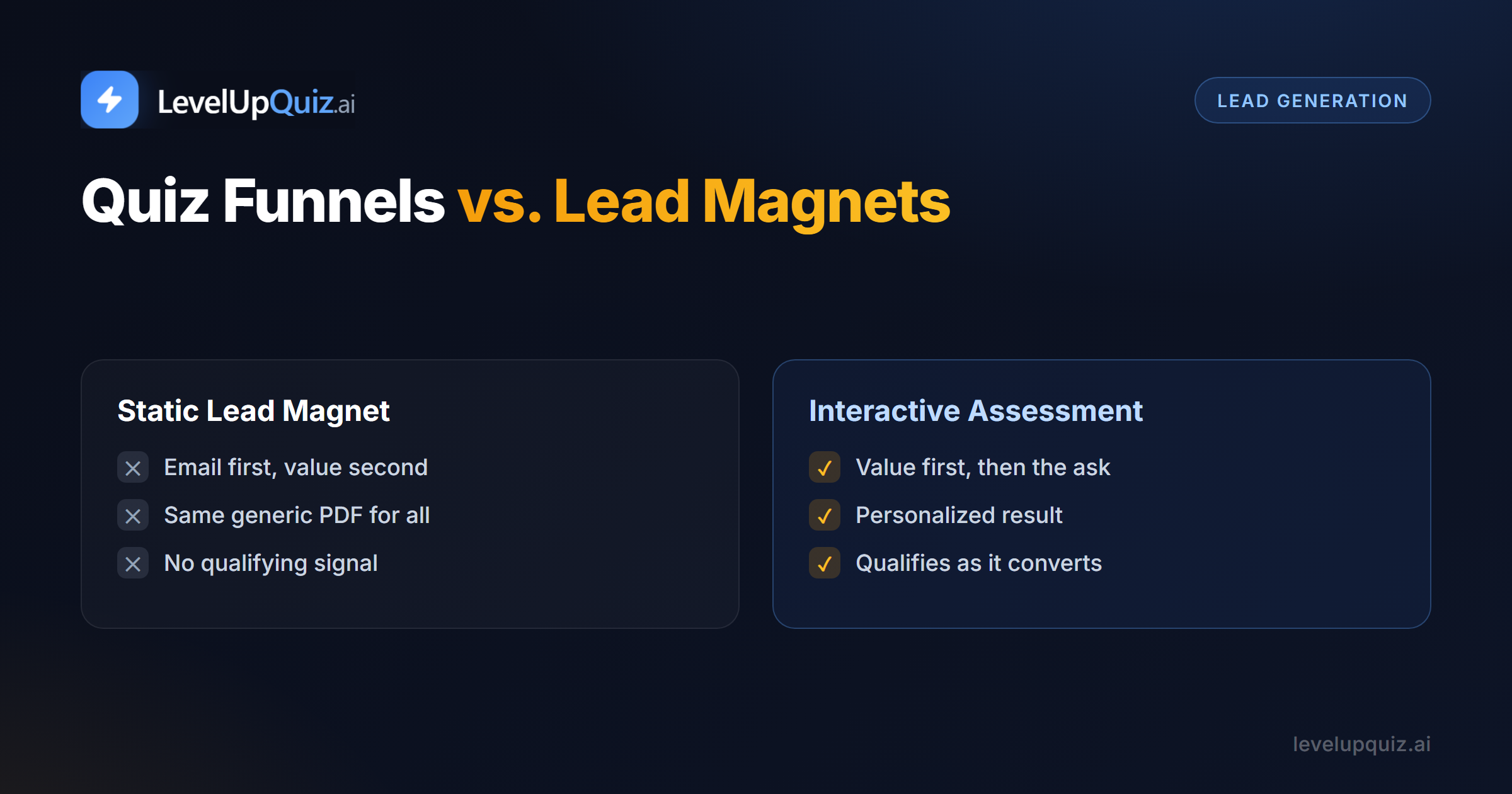
Quiz Funnels vs. Lead Magnets: Why Assessments Convert Better
Static lead magnets ask for the email before giving value. Assessments flip that, delivering a personalized result that earns the opt-in. Here is the breakdown.
Assessment-Led Marketing in Practice: What Actually Changes
Put a scored assessment at the front of your funnel and the metric that matters flips from lead volume to lead quality. The honest breakdown, including where it falls short.